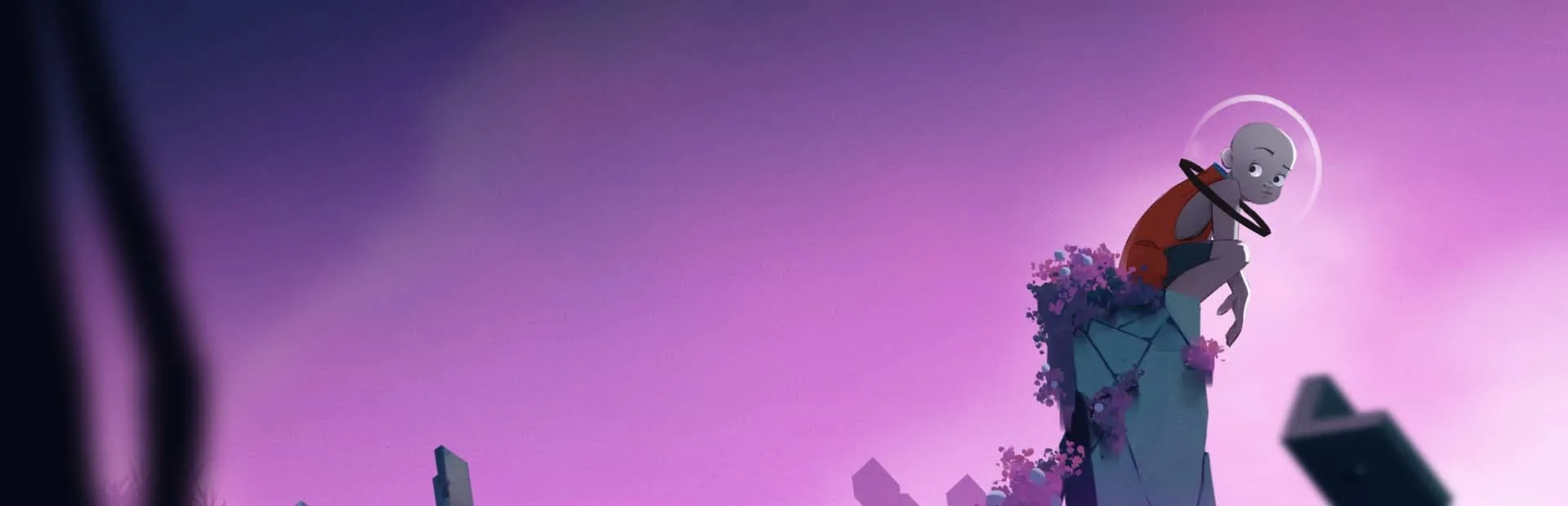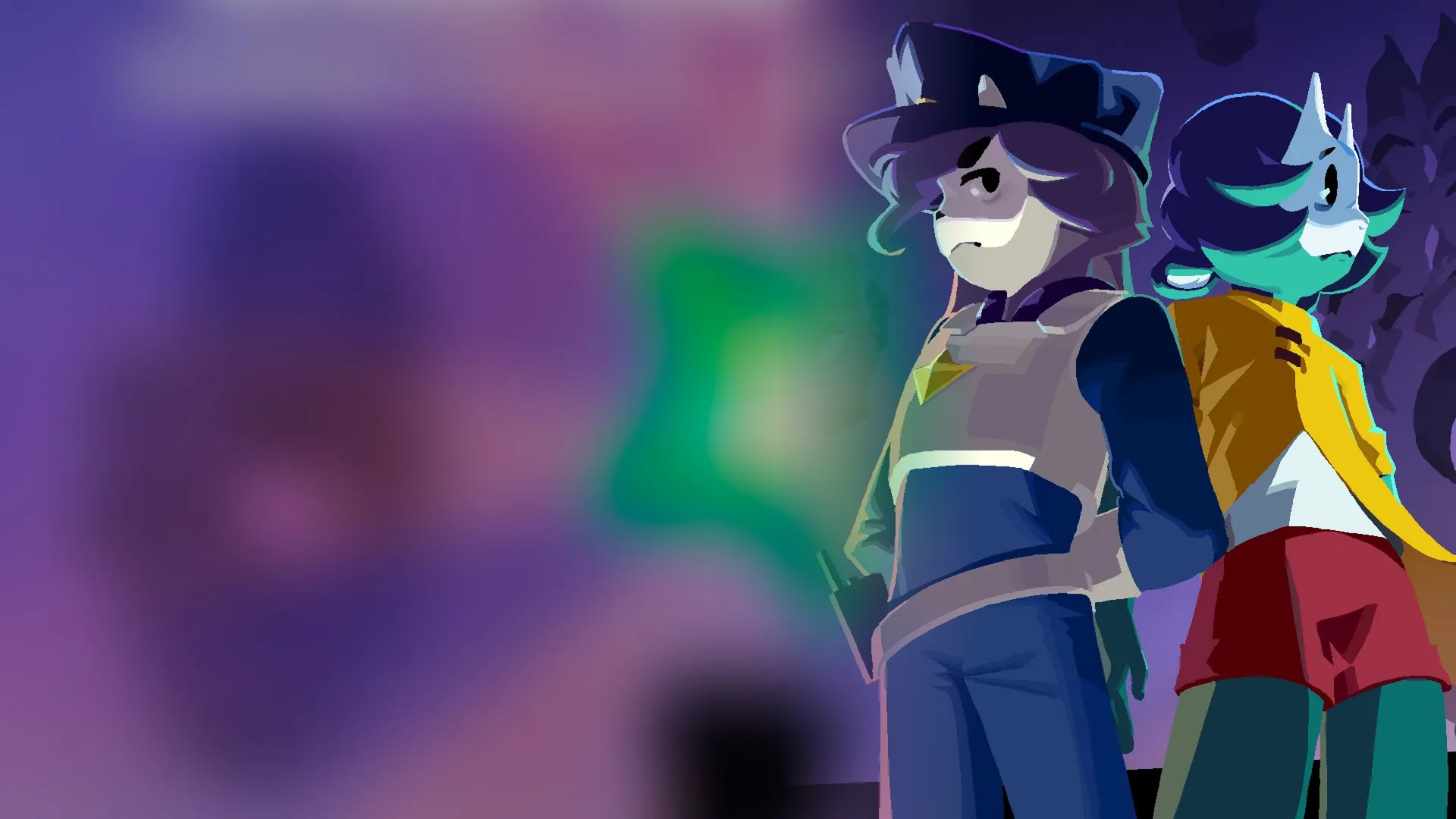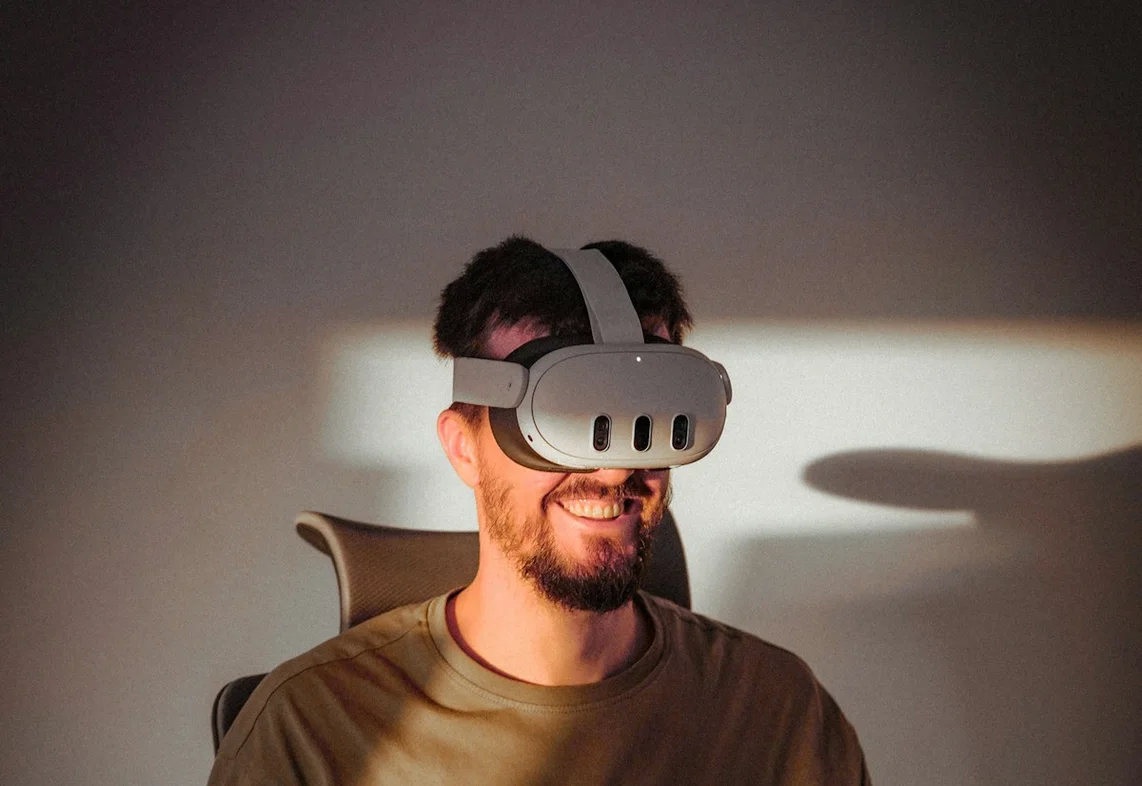
VR feasibility review
We assess the game’s camera, controls, scale and performance to scope what a VR version needs.
Game Porting
We port and adapt games for VR headsets - comfort and performance tuning, motion-controller input, QA, and certification handled end to end.
Trusted by studios and publishers





Comfort is a requirement
Once a game moves into a headset, frame rate becomes a comfort requirement and interactions built for a mouse need a real redesign. This is what we verify before a VR build ships.
Built for presence
From flatscreen to VR, or between headsets, we handle the full adaptation pipeline - camera and locomotion redesign, performance tuning for standalone hardware and motion-controller input. A full VR port is a game redesign for immersive play, not a reskin.
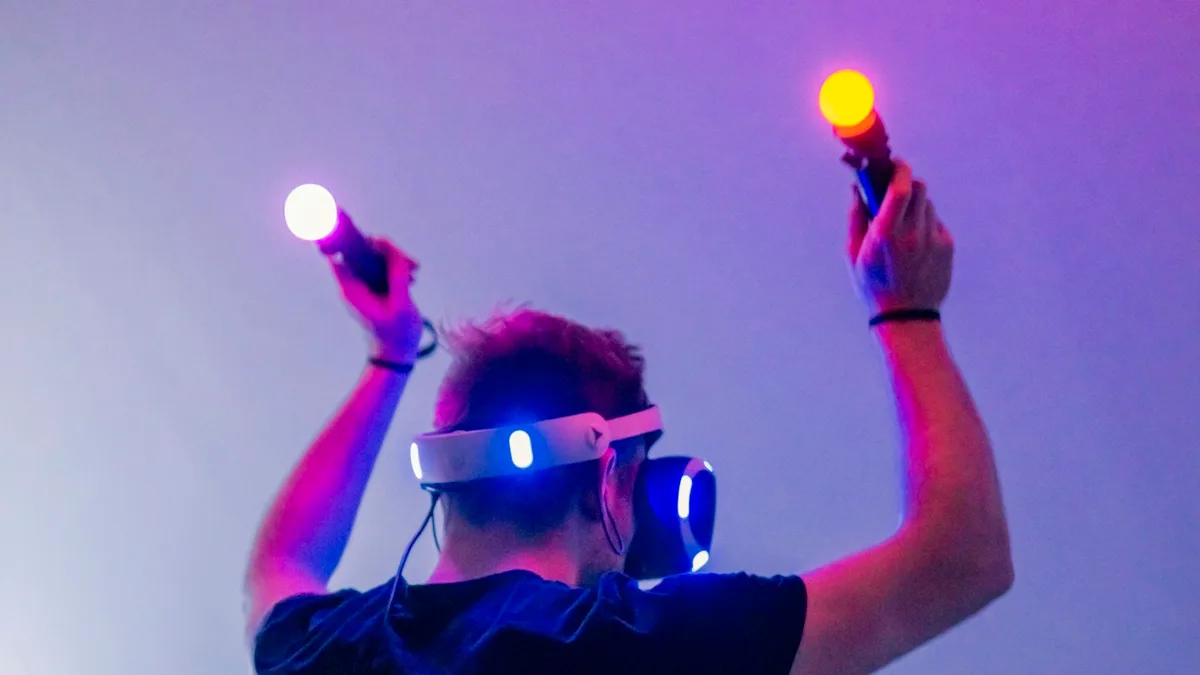
What a VR port includes
VR changes how players move, look and touch. We redesign those systems, then tune them until the experience is comfortable for hours.
We assess the game’s camera, controls, scale and performance to scope what a VR version needs.
First-person camera, world scale and cinematics rebuilt so the world feels right around the player.
Teleport, smooth movement, snap turning and vignettes, with options for every comfort level.
Grabbing, aiming and using objects with motion controllers, redesigned for presence.
Menus and HUD rebuilt as world-space or wrist UI that stays readable in a headset.
Rendering optimised to hold the headset’s target frame rate, on standalone and PC VR.
Comfort playtests and full QA on every target headset, by our in-house team.
VR store requirements, submission and release, plus 3 months of post-launch support.
50+
Games shipped to new platforms
20+
Global publishers & developers
3days
To a free, scoped estimate
3mo
Post-launch support, included
Why LYNCIS GAMES
Here are some of the factors that make us a reliable game porting partner.
One dedicated producer and lead developer stay with your project from kickoff through certification - no hand-offs, no lost context.
We review your codebase and share a scoped, accurate estimate within 3 business days - free of charge, no commitment.
We stay on for 3 months after release to patch, optimize, and keep your build certified through platform and OS updates.
If we miss the agreed scope or deadline, we fix it or refund it - it’s written into the agreement, not a promise.
How a VR port works
We discuss the game, target platforms, current build and the risks that could affect scope. You get a preliminary estimate before any technical review.
We review the camera, controls, scale and performance, and confirm what the VR version needs, the delivery time and the price.
You meet the team and get a shared project space, a producer and a lead developer for day-to-day questions.
Camera, locomotion and interactions rebuilt for VR first, tested in a headset early and often.
Frame-rate tuning on every target headset, comfort playtests and full QA by our in-house team.
Store submission and release, then bug fixes, patches and platform updates for three months after launch.
Engines


 + custom
Platforms






LYNCIS GAMES made porting far more cost-effective and easier to manage, letting us bring the release to more platforms. The game also passed certification on the first attempt - proof of how reliable the tool is.
 Ewa BuczkowskaProducer, Untold Tales
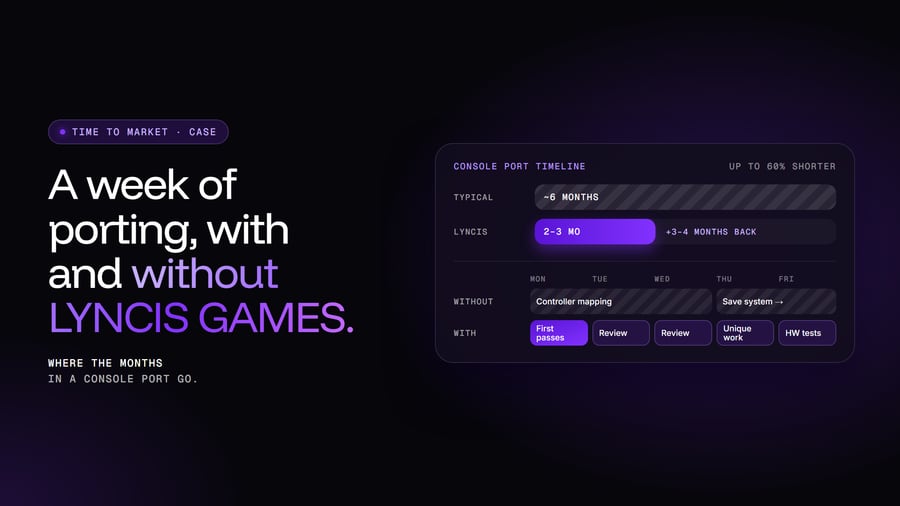
A typical console port takes around six months, and around 70% of that time is recurring engineering work. One week of the port, side by side with and without our framework, shows where the time goes and how three to four months come back.
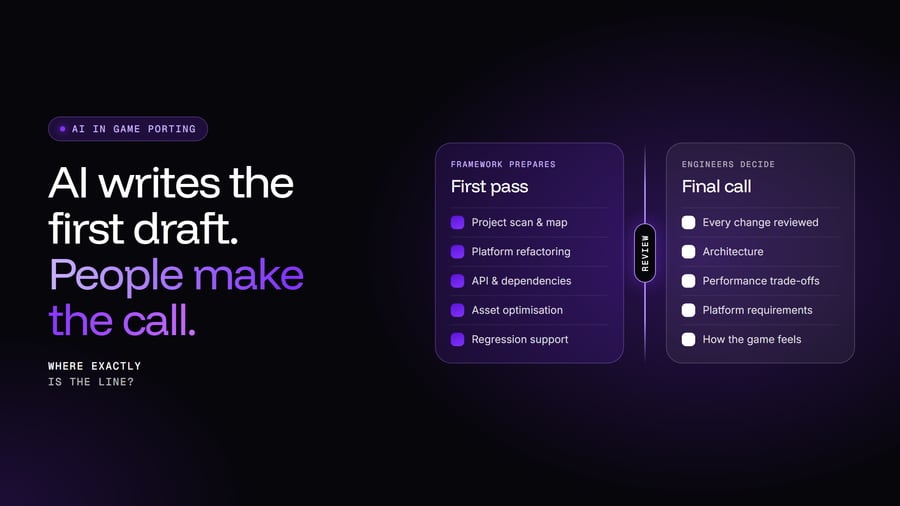
When studios ask about AI in porting, the real question is where the line sits. Here it is, in one infographic: what the LYNCIS GAMES framework prepares, what our engineers decide, and the two things AI never touches.
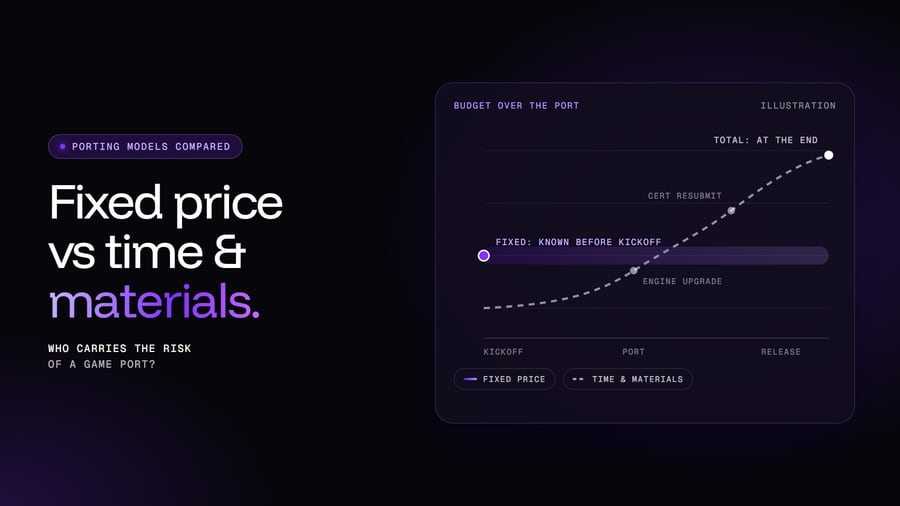
Hourly billing and a fixed price split the risk of a port in very different ways. A side-by-side comparison of time and materials and fixed-price game porting, and how to tell which one your project needs.
Beyond VR
The same team ports to consoles, mobile, Steam Deck and PC stores, so one partner can take your game everywhere.
Before you write
You don’t need a full brief. Even a rough idea of your game and the headsets you want is enough to get started.
We’ll review your request and share a scoped estimate within 3 business days.
FAQ
Short answers to what studios ask us most. Anything else - ask us directly, we reply within one business day.
Many can, but a good VR port is a redesign, not a conversion. Camera, locomotion, scale and interactions all change once the player is inside the game. Our feasibility review tells you what a VR version of your game needs.
By treating frame rate as a comfort requirement and giving players comfort options: teleport or smooth movement, snap turning, vignettes and a camera that never moves without the player.
Standalone and PC VR headsets. We tune performance for standalone hardware, where frame rate, thermals and battery are the tightest constraints.
VR ports are priced individually after a free technical assessment, as a flat fee billed per milestone - no hourly surprises. You get a scoped estimate within 3 business days.
Yes. We prepare the build for each store’s VR requirements, handle submission and release, and support the game for 3 months after launch.
Free technical assessment
The form covers the questions we need before we can give you a useful number. You can skip the optional details and fill in what you know today. First estimate in 3 business days, no commitment.
Krystian Mlodziejewski
Business & Relations Director