AI Writes the First Draft. People Make the Call. Where Exactly Is the Line?
When studios ask about AI in porting, the real question is where the line sits. Here it is, in one infographic: what the LYNCIS GAMES framework prepares, what our engineers decide, and the two things AI never touches.
 Sylwester PilarzHead of Design
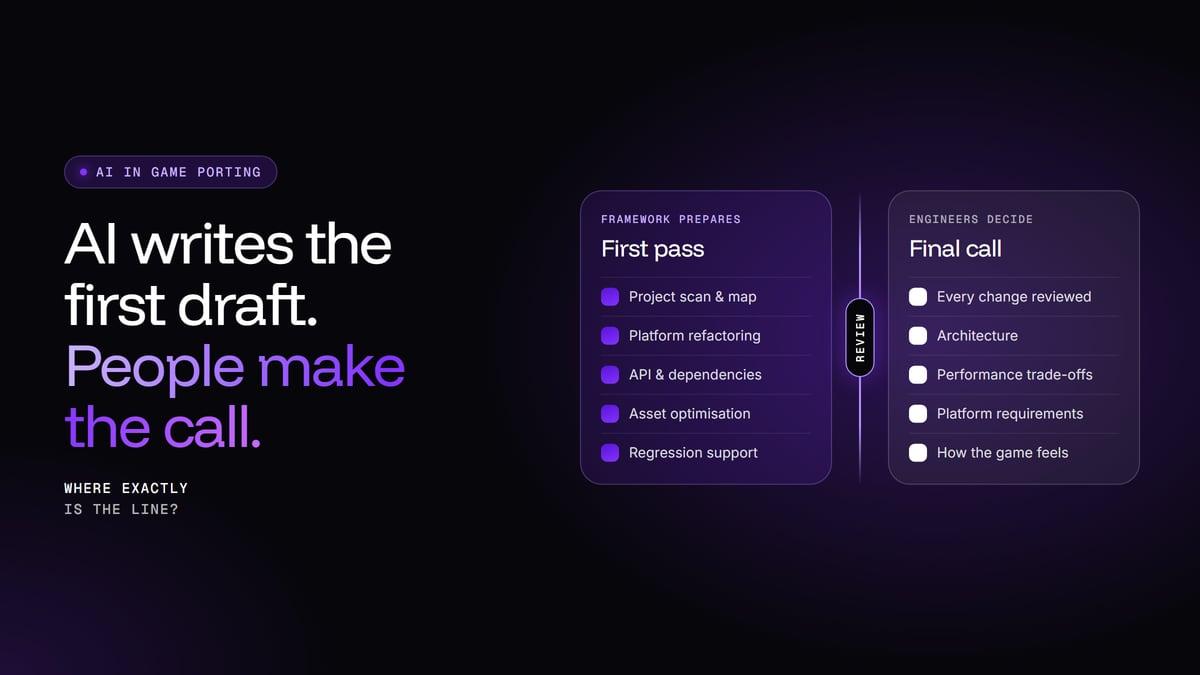
AI writes the first draft. People make the call.
When studios ask us about AI in porting, the question behind the question is almost always the same: where exactly is the line? What does the AI do, what do people do, and what does nobody let the AI near? Here it is, on one page.
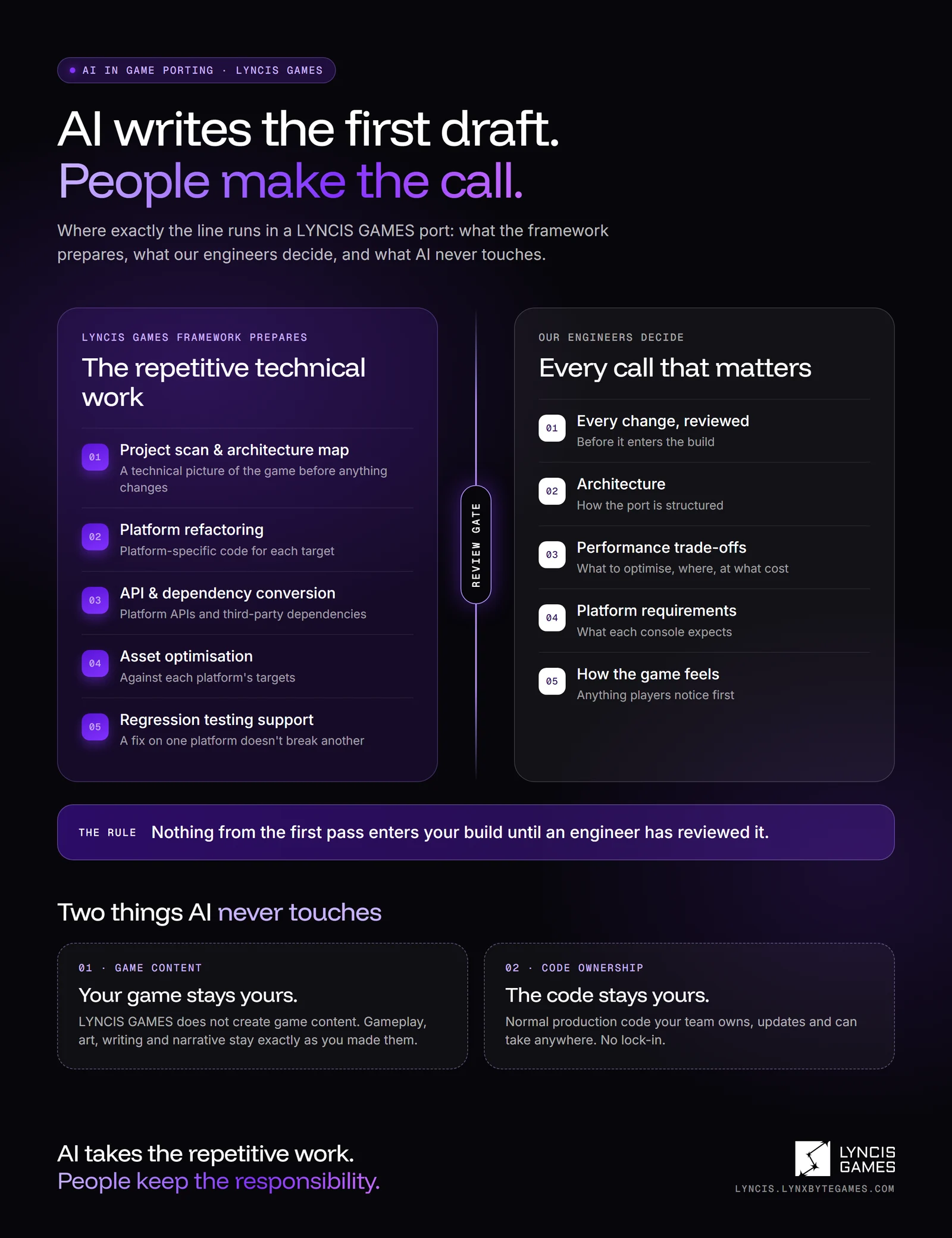
What the LYNCIS GAMES framework prepares
This is the repetitive technical layer of a port, the work that used to eat most of a porting schedule. The framework gives our team a first pass on it:
- Project scan and architecture map. Before anyone changes the project, the Project Scan builds a technical picture of the game and the architecture map shows how it is built.
- Platform refactoring. Platform-specific code adapted for each target.
- API and dependency conversion. Platform APIs and third-party dependencies converted for consoles.
- Asset optimisation. Asset work against each platform's targets.
- Regression testing support. So a fix on one platform does not quietly break another. More on regression testing in our glossary.
A first pass is a draft. Nothing from it goes into your game on its own.
What our engineers decide
The line runs through one rule: every change is reviewed by an engineer before it enters the build. After that, people own the decisions that actually matter:
- Architecture. How the port is structured and what changes in the codebase.
- Performance trade-offs. What to optimise, where, and at what cost.
- Platform requirements. What each console expects and how the game meets it.
- Anything that touches how the game feels. The things players notice first.
Then our in-house QA team tests the final build before release.
Two things AI never touches
Your game's content. LYNCIS GAMES does not create game content. Gameplay, art, writing and narrative stay exactly as you made them. A port should bring your game to new players, not rewrite it.
Your code ownership. Everything we deliver is normal production code that your team owns, updates and can take anywhere. There is no lock-in to our tools.
Why the line sits exactly there
The split is simple: AI takes the repetitive work. People keep the responsibility.
Repetitive technical work is where speed comes from. It is also where mistakes are easiest to spot in review. Decisions about architecture, performance and how a game feels are where responsibility lives, so they stay with people who have shipped ports and answer for the result.
That is also what lets us commit to a fixed price and a delivery date: faster technical work, with the same people accountable for every change. If you want the longer story of how the framework came to be, read the LYNCIS GAMES framework overview or the real value of AI in game porting.
Want to see how this would work on your game? Get a fixed-price estimate or read more on the LYNCIS GAMES page.
Frequently Asked Questions
What does AI do in a LYNCIS GAMES port?
The framework prepares the repetitive technical work: the project scan and architecture map, platform refactoring, API and dependency conversion, asset optimisation and regression testing support. It is a first pass that engineers review.
Who makes the decisions in an AI-assisted port?
Experienced engineers. They review every change before it enters the build and decide on architecture, performance trade-offs, platform requirements and anything that touches how the game feels.
Does LYNCIS GAMES use AI to create game content?
No. LYNCIS GAMES does not create game content. Gameplay, art, writing and narrative stay exactly as the studio made them.
Who owns the code after an AI-assisted port?
The studio. Everything we deliver is normal production code your team owns, with no lock-in to our tools.
Is the final build tested by people?
Yes. Our in-house QA team tests the final build before release.